Showing posts with label Indian. Show all posts

Monday, November 28, 2011

Curried Sweet Potato and Coconut Chowder


Fusion cuisine is something I think about doing often and decide against almost as often, depending on who will be eating the food. Fusing together different cuisines and techniques isn't something everyone loves and definitely requires an open mind and a sense of adventure. For some eaters, it is downright confusing if they are not versed in the inspiration for the new-fangled dish. On the other hand, I love trying favorite ethnic seasonings in unexpected concoctions and some cuisines were just meant to go together, such as French and Moroccan or Peruvian and Chinese. Fusing cuisines and getting super experimental isn't for the beginning cook, but trying it can give a beginner or novice some insight into the creative process used by cooking professionals. Everyone's cooking technique can benefit by pondering what makes nouveau, nouvelle, or fusion foods good.

I love exotic flavors and preparations, but also appreciate classic, reliable American flavors and forms.  When I'm thinking of fusing two techniques or cuisines together, sometimes I consider and reconsider, should I use the technique of recipe A and the seasonings of cuisine B or vice versa or somewhere in between? After much trial and error, I usually find that keeping the technique of the title  (such as chowder, chili, turnover, wrap, etc) is the best way to ground the dish and keep it true to it's name and your intention. Then comes the switching out of seasonings and ingredients to "fuse" an unexpected flavor, cuisine, or dish into the other. Sometimes you are just dying to use an ingredient scavenged from the greenmarket or you are just trying to use up something in the fridge in a creative way before it goes bad. Either way, developing a complete idea around the ingredient is the best way to ensure that things will come out great without going too far "out there" making the food unrecognizable. Using this theory can keep the novice cook from going completely astray and give the experienced cook or chef a clear sense of direction and, so makes the process more enjoyable. Sounds calculated for such a creative concept, doesn't it? It's not. These are just some general observations and rules of thumb to get thinking about creative cooking technique.

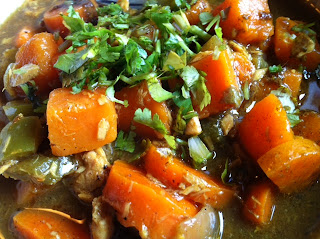
There is lots of room for variation in so-called "fusion cuisine". Here my appreciation for all-American chowder  is amped up with my obsession with sweet potatoes and Indian seasonings.  Coconut milk replaces milk and cream. Instead of celery and thyme as dominant seasonings, I used chaat masala, whole mustard and cumin seeds, and ginger.  Minced cilantro replaces parsley. Finish with a little lemon (or lime!).  As this simmered on my stove, I realized it was begging for some seafood (curry, coconut, fish..Yea!) and I had some leftover poached wild salmon hanging around, so in it went! This would be great with protein additions such as fish or shellfish, tofu, red beans, or any other thing you think should be tossed in. My fish was cooked so I added it at the end. For raw fish or meat, add it when you add the sweet potatoes and peppers. The result is technically a chowder, but with pungeant, spicy, and deep flavors of South Indian cuisine. Warm some of this up and enjoy with naan, paratha, rotis, or chapatis and maybe some green chutney and yogurt.

Gather your mise before you begin!

Curried Sweet Potato and Coconut Chowder

9-grain paratha from my Indian market
4 T virgin coconut oil (yes, it is good for you:)
1 t black mustard seeds
1 t whole cumin seeds
1-2 T chaat masala (or substitute garam masala or Sambar)
1 t paprika (I use hot, sweet is okay)
1 t ground turmeric
2 t minced fresh ginger
2 T minced fresh garlic

1 medium onion, diced
2 lb sweet potatoes (Jewel or Garnet yams), peeled and diced
1 green bell pepper, diced
2 lg carrots, sliced into 1/2" rounds
2 t sea salt
1/2-1 t honey (opt.)
2 cans coconut milk (or 1 can coconut milk, 1 can water for a light consistency)


In the bottom of a soup pot, melt down coconut oil and add mustard seeds and cumin seeds. Cook for one minute before adding remaining spices, ginger, and garlic. Stir and cook 3-4 minutes over medium until spices are fragrant.

Add diced onion and cook for another 2-3 minutes, stirring until onion begins to soften. Add sweet potatoes, pepper, and carrots and season with sea salt. Add honey and coconut milk (and water, if using) and stir to incorporate. Turn heat up and bring to almost a boil. Lower heat right away and let simmer for about 25 minutes, uncovered. Stir occasionally and check for tenderness.

When carrots and sweet potatoes are very tender, taste for seasoning and spiciness and adjust. Add about a cup of chopped cilantro and a healthy squirt of lemon juice. Serve immediately or let cool and reheat for later.

Sunday, October 10, 2010

Curried Pumpkin Bruschetta


Pumpkins in all colors!
It's that time of year again.  Pumpkin carving, autumn foods abound and a new winter squash idea is always useful.  Last night we went to our annual pumpkin carving party.  Every year we roast the seeds and also roast the pumpkin chunks that are popped out to snack on after the carving segment of the night.  This year I had tons of odds and ends to bring over for hors d'oeuvres since I had a busy cooking week and also had a photo shoot on Friday.  It was a last minute thought that turned out to be my favorite recipe of the season.

This year we did the seeds with butter and sea salt!
The inspiration here?  Pumpkin chunks and leftovers.  The result?  Curried  Pumpkin Bruschetta!  Utilizing extra bread, Indian-style pickled red onions from my last Indian food marathon, a dot of creme fraiche, and an even tinier dot of hot Indian chutney that our friend's grandmother sends us from India.  They were really beautiful and really, really tasty.  Unfortunately, no one captured them on camera in time then POOF they were gone.  A good sign, no?

Here is what I did.
Curried Pumpkin Bruschetta

about 2 cups pumpkin chunks, skin sliced off and pumpkin diced into medium-dice (about 1/3" chunks)
2 T extra-virgin olive oil
1 t honey
1/2 t ground cumin
1 t garam masala
1/4 t ground cinnamon
little dash of cayenne pepper
generous dash sea salt
freshly ground black pepper

1/2 ficelle or a few good bakery breadsticks sliced into 1/2" rounds
20 or so chunks pickled red onion (see below)
a few tablespoons creme fraiche (or plain yogurt)
Indian hot sauce or hot chutney

Preheat oven to 400 F.
Toss pumpkin chunks in a bowl with olive oil, honey, spices, salt, and pepper.  Spread out on a baking sheet and roast 20-30 minutes or until tender and slightly browned.

Arrange ficelle slices on a serving platter.  Mound about a tablespoon of roasted pumpkin chunks on each round.  You can smash the diced pumpkin together just a little so they stick a bit and stay on the bread.

Neatly top with a chunk of pickled onion, dot with creme fraiche, then put a tiny dot of hot chutney on top of the creme fraiche and serve!

Note for the pickled red onions:  I had them in my fridge and they work beautifully, but you could use small chunks of raw onion or follow these general instructions.

Simmer a diced red onion with vinegar, sugar/honey, a little salt, 1/2 jalapeno, and ginger matchsticks.  Cover and chill.

Sunday, August 8, 2010

Tamarind Rice

Tamarind Pods
Well, it has happened again.  I am on an Indian food kick that can't be tamed.  I haven't actually bothered to cook any this week, but I have been eating it every chance I get and could seriously eat it at every meal if I allowed myself.  Last night I had a delicious black gram lentil dal and samosas.  It was the best dinner and so simple.  I  was just craving those deep, layered spices and the hearty lentil and bean mixture was the perfect vehicle.

Instant Tamarind!
Before I head out of town tonight for the more stoic cuisine of Cape Cod, I will give myself one more richly spiced food fix.  As usual, I headed to my trusty copy of American Masala, by Suvir Saran.  Tamarind Rice is an outrageously good side dish that would be a great accompaniment to an Indian meal, but it also would make a lovely side dish to a more classic American meal.  It pairs nicely with grilled veggies, fish, or chicken and is able to really liven up many menus.

According to Wikipedia, tamarind is an "indehiscent legume" sometimes called a pod, 12 to 15 cm (3 to 6 inches) in length with a hard, brown shell.  The fruit has a fleshy, juicy, acidulous pulp.  The tamarind is best described as sweet and sour in taste, and high in acid, sugar, and vitamin B  and, interestingly for a fruit, calcium.  If you have trouble finding the tamarind concentrate at your regular market, check an Indian spice store, Asian market, or specialty store. 


Tamarind Rice
Serves 8
1 tablespoon, plus 1 1/2 teaspoons tamarind concentrate
1/2 cup warm water
3 tablespoons canola oil
1/2 cup peanuts, roughly chopped
1 tablespoon mustard seeds
16 dried curry leaves, roughly torn (optional, but so good in this so try to get some)
6 dried red chiles
1 teaspoon cumin seeds
3/4 teaspoon turmeric
1 large red onion, quartered and thinly sliced
1 tablespoon plus 1 teaspoon kosher salt
1 teaspoon curry powder
7 cups cooked brown or white basmati rice, spread out on a baking sheet and cooled to room temperature


If you haven't done it yet, cook the rice and spread out on a baking sheet to cool.

Place the tamarind in a small bowl. and pour the warm water over it.  Whisk together until the tamarind is completely dissolved and set aside.  
Heat the oil, peanuts, and mustard seeds in a large skillet or pot over medium-high heat until mustard seeds begin to pop, 2 to 3 minutes.  Add the curry leaves, chiles, cumin, and turmeric and cook until the peanuts are golden, about 1 1/2 minuts.  Add the onion, salt, and curry and cook until the onion is dot, 4 to 5 minutes, stirring often (if onion begins to burn, turn the heat down).  Add the tamarind water and cook until the water is evaporated, stirring often for about 2 minutes.

Stir in the rice and cook until the rice is hot, about 2 minutes (if the rice was in the refrigerator it will take an extra 2 to 4 minutes to warm up), stirring once or twice to make sure nothing burns at the bottom of the pan.  Taste for seasoning and serve.

Thursday, July 22, 2010

Mantra: the rules of indulgence and a recipe for Cucumber Water

Upon hearing on the morning news that we were entering our fourth big heat wave of the summer, I decided to dig out my new cookbook, Mantra: the rules of indulgence, by Jehangir Mehta and find his recipe for Cucumber Water that I have been itching to try.  I ordered the book a few months ago and hadn't yet had time to dig through it yet.  Mantra: the rules of indulgence is a dessert cookbook written by an Indian chef who uses ayurveda, his Indian upbringing, and his extensive experience in chic and high-end restaurants together to create the recipes in this book.

Some of his recipes sound absolutely indulgent and others sound so obscure I honestly don't really understand them.  Many recipes contain exotic ingredients and others have new and uncommon techniques applied to standard ingredients.  Of the ones that tempted me to try, the Jasmine Glazed Doughnuts, Pepper-Coconut Sorbet, Chamomile Macaroons, and Red Grape Sev stand out by far.  The Beet Sorbet and Radish Gourd Chutney sound fascinating and could potentially make it to my favorites list.  I'm not quite sold on the Vegetable Cake and Cauliflower Clafoutis recipes, although I won't officially comment until I've tried them...sweet and savory does make an impact...

For today's heat and bright sun, I will stick with what I need which is hydration and refreshment.  To add a bit of color and some extra fruitiness, I replace the author's ingredient, 1/2 lemon, with 2 juicy slices of organic valencia orange.  I will let this one sit for a few hours in the fridge and am looking forward to a tall glass later this afternoon!

       Cucumber Water
adapted from and inspired by Mantra: the rules of indulgence, by Jehangir Mehta

Two 12-inch unpeeled cucumbers (I think using just one is better, though.), julienned
1/2 teaspoon kosher salt (I used Hawaiian pink sea salt)
1/2 lemon (or two orange slices!)

Add the cucumbers and salt to 1 quart (4 cups) water in a pitcher.  Squeeze int he lemon juice and drop in the squeezed lemon (or orange).

Briefly stir. Cover and refrigerate until cold.  Remove the lemon, if desired.  Strain before drinking if you prefer (I wouldn't, though).

Friday, June 11, 2010

Chutney Barbecue Shrimp or Tofu

Here is an easy way to spice things up for the weekend.  With an Indian-inspired marinade, this dish is great for entertaining, but it's simple enough that you may want to keep it all for yourself.  It's a little spicy, a little glaze-y, and finished with lime.  Serve this over cilantro rice as an entree or wrap in strips of warmed naan as an appetizer.

With the sweet chutney base, this marinade makes it easy to char the edges if the shrimp and tofu without burning them.  It's exotic and summer-y and a great way to celebrate the weekend.


Chutney Barbecue Shrimp or  Tofu

2 lb large shrimp or about 25 oz baked tofu, cubed into 1-1 1/2" cubes (I like the Asian-marinated ones for this)

1/3 cup papaya or mango chutney
3 T yellow curry paste
1/3 tsp sea salt
1 tsp Indian hot sauce
Freshly ground black pepper
2 T virgin coconut oil
2 cup fresh or frozen peas
¼ cup chopped cilantro
3 T freshly squeezed lime juice


Clean and de-vein shrimp and rinse.  Let dry.  (Or cube baked tofu)

In a large bowl, whisk together chutney, curry paste, salt, hot sauce, and pepper.  Add shrimp and toss together.  If you have time, marinate for about 20 minutes in the fridge.

Heat grill or sauté pan to high.  Add coconut oil to pan or brush grill basket with oil.  Add shrimp and cook on high for about 2 minutes tossing and stirring, constantly. 

Add peas and cook until shrimp are done and everything is beginning to brown and edges are charring.  If you are grilling and the peas would fall through your basket, just give them a quick saute on the stove and toss together with shrimp or tofu at the end.

Remove from heat and transfer to a serving plate.  Top with chopped cilantro and lime juice.

Serve immediately!

Perfect with cilantro rice or fragrant yellow rice.

Monday, January 18, 2010

Simple Lentil Dal with Whole Cinnamon, Cardamom, and Cloves


Today I want to feature my new favorite cookbook author. Suvir Saran is the chef of Michelin starred restaurant Devi and author of Indian Home Cooking and American Masala. Both cookbooks make using exotic spices and preparing Indian food straightforward and absolutely perfect every time and are a great learning experience for the novice home cook-- even for those who feel intimidated by exotic recipes

Indian Home Cooking is filled with authentic recipes that one may find in the kitchen of an Indian grandmother. Truly, everything I have tried out of this book has put the cuisine of most Indian restaurants to shame. I don't know whether his techniques are his own or a regional Indian style, but I was surprised at how little oil he uses. He doesn't use much ghee at all. In most recipes, there is just a few tablespoons of canola oil. His recipes' flavors come from the frying of the spices and layering them with skill, not by dolloping extra ghee into the pot. The result is fragrant, rich, and contains "the aromas of the ages", as stated by one of my clients. He takes the mystery of out the layered spices and fragrances of this richly woven cuisine and makes the flavors accessible to all.

American Masala is an equally fantastic book that offers recipes of Indian food altered for the American palette, American-inspired Indian food, and Indian-inspired American food (if you can believe that!). A few examples from this book are Spicy-Sweet Chicken Wings that use honey and garam masala, Tamarind-glazed Meatloaf, and Stir fried Carrot Salad which has cilantro, lime, coriander, and cumin.

An important thing to note for both cookbooks is the importance of "gathering your mise". The recipes are simple and easy to follow, but you MUST have your ingredients ready/measured/chopped/pureed. I like to take a few prep bowls and prep each grouping of ingredients together before I start cooking anything, so when the recipe says to quickly add seven ingredients (or something like that), they are ready to go. This prevents most mishaps such as burning your spices and makes the preparation virtually fool-proof.

Check your supermarket for the spices and even for things like tamarind paste and mango powder(although for some things he suggests easier to find substitutions, if needed). It's really not that hard to find this stuff. There are some great spice stores online, too. If you live in NYC, head to little India in Jackson Heights, Queens (E, V, R to Roosevelt Ave.). Patel Bros. is amazing. In Manhattan, there is Spice Corner and Kaluystans.

I will keep cooking my way through these books and when I'm done, I will most likely start over and do it again. This food is just that good. Well, here is a teaser recipe. Get ready. Before long, you, too, will be totally immersed in this guy's food.

Simple Lentil Dal with Whole Cinnamon, Cardamom, and Cloves
from Indian Home Cooking, by Suvir Saran

1 1/2 Tablespoons canola oil
1 1-inch piece cinnamon stick
1 teaspoon cumin seeds
3 whole cloves
4 green cardamom pods
1 cup pink lentils, picked over, washed and drained
1/2 teaspoon turmeric
4 cups cold water
1 teaspoon salt, or to taste

Tempering Oil
1 Tablespoon canola oil
1 medium onion, finely chopped
3 garlic cloves, mashed to a paste
1 Tablespoon minced fresh ginger
1 fresh hot green chile, minced

1/4 cup chopped fresh cilantro
Juice of 1/2 lemon or lime


Heat the oil with the cinnamon stick in a large saucepan or kadai over medium-high heat. Cook, stirring, until the cinnamon unfurls, 1 to 2 minutes.

Add the cumin, cloves, and cardamom and cook, stirring, until the cumin turns a golden brown color, about 1 more minute. Add the lentils, turmeric, water, and salt. Bring to a boil and skim well, Turn down the heat and simmer, covered, until the lentils are soft, 20 to 30 minutes. Add more water during cooking, if necessary. Taste for salt and add more if you need to.

Ladle about 1/2 cup of the lentils into a small bowl and mash them with a spoon. Return the mashed lentils to the pot and give the dal a stir. Continue cooking at a simmer, uncovered, for 5 minutes to thicken. If you like a thicker dal, use a whisk to break up the lentils into a puree. If you like a thinner dal, add water. Remove the cinnamon stick.

For the tempering oil, heat the oil in a small saucepan or kadai over medium-high heat. Add the onion and cook until it just begins to brown around the edges, 4 to 5 minutes. Add the garlic paste, ginger, and minced chile and cook just to mellow the raw taste of the garlic, 10 to 15 seconds.

Stir half of the tempering oil into the dal along with half of the cilantro and all of the lemon or lime juice. Simmer very gently for 5 minutes Transfer the dal to a serving bowl, pour the remaining tempering oil over the top, and sprinkle with the remaining cilantro. Serve hot.