Showing posts with label 1st course. Show all posts

Wednesday, January 25, 2012

Italian Baba Ghanouj with Balsamic Reduction and Stewed Figs


Or is it baba ghanoug or baba ganush....to my knowledge, there isn't a "right" translation and spelling from Arabic to English and it is often spelled differently everywhere you look. This popular, tangy eggplant dip grew in popularity in the U.S. mostly in the last ten years or so. I think of it as hummus's lesser known sibling. The hummus boom made the garbanzo bean version of this dip wildly popular and I have to wonder, why not eggplant? What made hummus so much more common? The plethora of hummus flavors out there is overwhelming. There is everything from roasted pepper or olive hummus to Buffalo-style hummus and pesto hummus. I have even seen edamame hummus. While these are exciting alternatives to the standard, I see no reason to limit myself to all beans. I love a good batch of baba ghanouj (my preferred spelling) with it's vague smokiness from the roasting, creaminess from the tahini, and bit of acidity on the tongue. I wonder, why can't we change a few seasonings and make flavored baba ghanouj the way some hummus companies and kitchens make flavored hummus?

Traditional baba ghanouj is made with a roasted eggplant (roasted over a flame, if possible, to achieve that smokiness), tahini, lemon juice, and olive oil. To be really traditional, you could add a wee bit of pomegranate molasses, found in Middle Eastern stores, and I love adding toasted cumin seeds and some sweet paprika. That is the classic version--not too far off from what is added to garbanzo beans for traditional hummus.

Versatile ingredients all ready to go!
For my eggplant dip to rival hummus, I am going to roast a medium eggplant with some garlic cloves, add fresh oregano, olive oil, and balsamic reduction drizzled on top in lieu of the pomegranate molasses.  Rather than a taste of the Middle East, we are off to Italy for this one. This is great served with sliced Italian bread, focaccia, or pita. I may even try to scrounge up some dried figs, stew them to soften them and garnish the top with wintery sweetness.

Italian Baba Ghanouj with Balsamic Reduction and Stewed Figs

1 medium eggplant
6-8 cloves garlic, with skins on
2 T extra-virgin olive oil+ 4 T
1/3 c +2 T inexpensive, everyday balsamic vinegar
8 dried figs
2 t freshly squeezed lemon juice
1/2 t chopped fresh oregano, or 1/4 t dried
1/2 t sea salt
freshly ground black pepper

crusty bread, focaccia, or flatbread for serving


Preheat to oven to 350 degrees. Wash the eggplant and coat gently with a tablespoon of olive oil. Place on a large piece of foil that is laid across a baking sheet. Rub cloves of garlic with another tablespoon of oil. Nestle them near the eggplant in the center of the foil and wrap them loosely.

Roast for about 40 minutes, checking after about 25 minutes to check the garlic cloves. If they are very soft before the eggplant, pull them out and let them cool. When eggplant is done roasting, open the foil and also let it cool.

In a small saucepan, cook the balsamic vinegar over medium heat to reduce by 1/2. It is done when it is thick and syrupy. You can go a little over and reduce more, but don't reduce less. Transfer to a bowl.

Without washing the pot, add about 1/2 c water, 2 T balsamic vinegar, and the dried figs. Simmer until figs are very tender and water/balsamic mixture is just about evaporated. Let cool, then quarter the figs.

When eggplant is cooled, slice open and scrape out the insides into a mixing bowl. Mash with lemon juice, oregano, salt, pepper, and olive oil to taste. Add about half of the balsamic reduction and taste, adding and adjusting salt and lemon, as well.

Pour into a low flat bowl to serve. Garnish the top with olive oil, balsamic reduction, and quartered figs. Serve room temperature with warm bread.

Monday, November 28, 2011

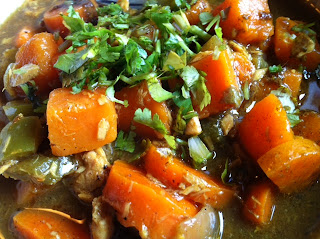
Curried Sweet Potato and Coconut Chowder


Fusion cuisine is something I think about doing often and decide against almost as often, depending on who will be eating the food. Fusing together different cuisines and techniques isn't something everyone loves and definitely requires an open mind and a sense of adventure. For some eaters, it is downright confusing if they are not versed in the inspiration for the new-fangled dish. On the other hand, I love trying favorite ethnic seasonings in unexpected concoctions and some cuisines were just meant to go together, such as French and Moroccan or Peruvian and Chinese. Fusing cuisines and getting super experimental isn't for the beginning cook, but trying it can give a beginner or novice some insight into the creative process used by cooking professionals. Everyone's cooking technique can benefit by pondering what makes nouveau, nouvelle, or fusion foods good.

I love exotic flavors and preparations, but also appreciate classic, reliable American flavors and forms.  When I'm thinking of fusing two techniques or cuisines together, sometimes I consider and reconsider, should I use the technique of recipe A and the seasonings of cuisine B or vice versa or somewhere in between? After much trial and error, I usually find that keeping the technique of the title  (such as chowder, chili, turnover, wrap, etc) is the best way to ground the dish and keep it true to it's name and your intention. Then comes the switching out of seasonings and ingredients to "fuse" an unexpected flavor, cuisine, or dish into the other. Sometimes you are just dying to use an ingredient scavenged from the greenmarket or you are just trying to use up something in the fridge in a creative way before it goes bad. Either way, developing a complete idea around the ingredient is the best way to ensure that things will come out great without going too far "out there" making the food unrecognizable. Using this theory can keep the novice cook from going completely astray and give the experienced cook or chef a clear sense of direction and, so makes the process more enjoyable. Sounds calculated for such a creative concept, doesn't it? It's not. These are just some general observations and rules of thumb to get thinking about creative cooking technique.

There is lots of room for variation in so-called "fusion cuisine". Here my appreciation for all-American chowder  is amped up with my obsession with sweet potatoes and Indian seasonings.  Coconut milk replaces milk and cream. Instead of celery and thyme as dominant seasonings, I used chaat masala, whole mustard and cumin seeds, and ginger.  Minced cilantro replaces parsley. Finish with a little lemon (or lime!).  As this simmered on my stove, I realized it was begging for some seafood (curry, coconut, fish..Yea!) and I had some leftover poached wild salmon hanging around, so in it went! This would be great with protein additions such as fish or shellfish, tofu, red beans, or any other thing you think should be tossed in. My fish was cooked so I added it at the end. For raw fish or meat, add it when you add the sweet potatoes and peppers. The result is technically a chowder, but with pungeant, spicy, and deep flavors of South Indian cuisine. Warm some of this up and enjoy with naan, paratha, rotis, or chapatis and maybe some green chutney and yogurt.

Gather your mise before you begin!

Curried Sweet Potato and Coconut Chowder

9-grain paratha from my Indian market
4 T virgin coconut oil (yes, it is good for you:)
1 t black mustard seeds
1 t whole cumin seeds
1-2 T chaat masala (or substitute garam masala or Sambar)
1 t paprika (I use hot, sweet is okay)
1 t ground turmeric
2 t minced fresh ginger
2 T minced fresh garlic

1 medium onion, diced
2 lb sweet potatoes (Jewel or Garnet yams), peeled and diced
1 green bell pepper, diced
2 lg carrots, sliced into 1/2" rounds
2 t sea salt
1/2-1 t honey (opt.)
2 cans coconut milk (or 1 can coconut milk, 1 can water for a light consistency)


In the bottom of a soup pot, melt down coconut oil and add mustard seeds and cumin seeds. Cook for one minute before adding remaining spices, ginger, and garlic. Stir and cook 3-4 minutes over medium until spices are fragrant.

Add diced onion and cook for another 2-3 minutes, stirring until onion begins to soften. Add sweet potatoes, pepper, and carrots and season with sea salt. Add honey and coconut milk (and water, if using) and stir to incorporate. Turn heat up and bring to almost a boil. Lower heat right away and let simmer for about 25 minutes, uncovered. Stir occasionally and check for tenderness.

When carrots and sweet potatoes are very tender, taste for seasoning and spiciness and adjust. Add about a cup of chopped cilantro and a healthy squirt of lemon juice. Serve immediately or let cool and reheat for later.

Friday, September 23, 2011

Moroccan Lentil Vegetable Soup

Soup in progress!
As usual, I am reluctant to say goodbye to summer, but the darker skies and rain isn't always such a bad thing. After an exciting and very eventful summer and so far a ridiculously busy fall, a few days of rain and accepting that I've caught a cold is a great excuse to stay in and make soup.

Sprouted wheat with raisins, a perfect pairing
I bought the vegetables, broth, and tomato paste yesterday with the intention of making a classic American soup to soothe my sore throat, steam this cold out, and get some veggies down, especially since I'm eating for two now. I haven't been able to stomach any greens all week as this bug slowly started settling in. As I began to chop ingredients and toss them in the pot, I realized I wanted something with some flavor! I'm quite sure a Moroccan lentil vegetable soup in Morocco is nothing like this, but the spices are about right.  Despite my un-Moroccan combo of mirepoix, summer squash, and collards, this soup has a tangy, spicy Moroccan feel and and can fix up a boring soup recipe. If I had some winter squash, it would have gone into the pot in a heartbeat. Whole Foods had a gorgeous loaf of savory sprouted wheat bread that was woven with raisins and absolutely superb warmed up and served alongside this soup.

Enjoy a pungeant and flavorful pot of soup to welcome the first weekend of fall. This one is for the least adventurous to the most adventurous eaters. If you just aren't sure if Moroccan spices are your thing, then go light on them and keep the seasoning subtle. If you are feeling adventurous, go generous with the spices and cayenne. Welcome back, fall!

Typical spices combined for an exotic flavor blend!

Moroccan Lentil Vegetable Soup

3 T extra-virgin olive oil
3 T ghee (or more olive oil)

1 t ground turmeric
1 t ground cinnamon
1 t ground cumin
1/2-1 t cayenne pepper (or more)

1 t freshly grated ginger root
3 t freshly grated garlic cloves
2 medium onions, diced
4 stalks of celery, thinly sliced
4 medium carrots, thinly sliced
1 medium zucchini, sliced into 1/2 moons
1 medium yellow squash, sliced into 1/2 moons
6 crimini mushrooms, sliced
1 green bell pepper, diced
1 1/2 cups dried brown lentils, rinsed and sorted
vegetable broth or water or a little of both
1  6 oz can tomato paste
1 small bunch collard greens, roughly shredded
juice of 1 large lemon
2 t sea salt, or to taste
freshly ground black pepper

Heat oil and ghee in a large soup pot over medium heat add spices, ginger, and garlic and cook for one minute, stirring and releasing their fragrance. Add onion, celery, carrot, zucchini, squash, mushrooms, bell pepper, and any other veggies you feel like throwing in (Save leafy veggies for the end.).Add 1 1/2 cups brown lentils

Stir and cook for about 10 minutes and coating them in the seasoned oil. Add vegetable and/or water to cover by 2 inches. I typically use a 32 oz. Tetrapak, then add water to cover, if needed. Add tomato paste and season with a little salt and pepper. Bring to a boil, then reduce heat to medium-low and simmer partially covered for 30 minutes or so, until veggies and lentils are tender and seasonings have married. Add shredded collard greens, or other leafy green and cook on low for 5-8 more minutes until wilted and incorporated.

Finish generously with lemon juice, sea salt, and pepper. I'm insane and like to put plain organic whole milk yogurt on everything and this soup is no exception. If you are craving a cooling garnish, it is awesome!

Tuesday, August 23, 2011

Mediterranean Bruschetta with Fava Bean Puree


If you are lucky enough to have a market that carries fresh fava beans in season, then be sure to pick some up when you see them. They are typically found fresh in June in the northeast, but are now available in cans and jars. There are even cooked favas in water in a vacuum seal pack at Whole Foods in the produce section so, while fresh is best, your fava season can be extended if you love them as much as I do. Fava beans have an earthy, green flavor that hold their own as an hors d'eouvre or are often seen sauteed and as an accompaniment to fish or chicken. They are fresh, bright green, and addictive.

Drain and rinse.
I bought a huge batch this spring and shelled, peeled (the tender, beany outer skins), blanched, and froze a bunch to extend my fava season. Unlike canned, jarred, or dried, they kept their perky green color and taste so fresh I thought they should be showcased on a baguette. Served with zucchini pancakes and roasted tomato sauce, this is a fantastic late-summer vegetarian/flexitarian meal or it's perfect as an appetizer.


Mediterranean Bruschetta with Fava Bean Puree

3-5 large cloves garlic, unpeeled
Cool roasted garlic before peeling.
extra-virgin olive oil (about 1/4 cup total)
1 1/2 cups cooked fava beans

Tuesday, June 28, 2011

Fried Green Tomatoes

Make it elegant and serve with creme fraiche and pea shoots.

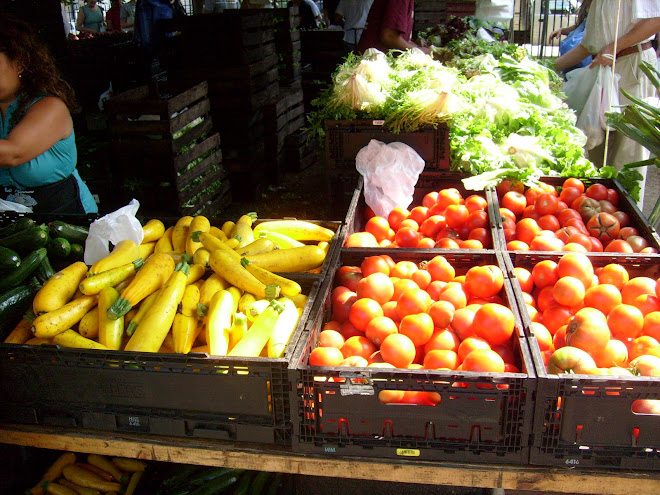
One of the great things about shopping for produce at the greenmarket versus the supermarket this time of year is the variety and abundance. Right about now, the purple, yellow, and red carrots are being pulled up for market and the varieties of summer squash are vast, ranging in color from pale, pale yellow to deep, dark green. Things you may have never even seen before are available and waiting to be tried. Soon there will be big bunches of dill flowers and hundreds of peppers in every shape, size, and color.
Commune cuisine at its finest!
This past weekend I was reminded of one of my Southern-inspired summer favorites--fried green tomatoes. The hard green tomatoes piled in a crate looking meek and lonely next to the fancy and exotic heirlooms wooed me with their simplicity and humble presentation. I filled a bag right away. Fried green tomatoes are a symbol of summer sun and relaxation to me. Served with some kale, and smoky vegetarian pinquitos beans and rice, these sour and savory morsels don't last long at my table.


Fried Green Tomatoes

10-12 firm, green underripe tomatoes (ripe, green heirlooms are watery and don't come out the same)
1 1/2 c yellow cornmeal
1 c whole wheat or oat flour (or corn flour for gluten-free)
One of those little buggers began to ripen overnight!
1 T Cajun seasoning (opt.but good!)
1 t garlic powder
1 t sweet paprika
1/2 t sea salt
1/4 t freshly ground black pepper

1 egg (opt.)
1 1/2-2  cups almond milk, soy milk, milk, or water

expeller-pressed canola/sunflower/safflower oil for frying (a cup or so)


I fried it anyway.
Wash and core tomatoes and slice into rounds about 1/3" thick. Set aside. In a shallow bowl or on a plate, combine cornmeal, flour, Cajun seasoning, garlic powder, paprika, salt, and pepper.

If using egg, whisk together egg with liquid in a medium bowl. Start with 1 1/2 and as you dredge and fry, add more liquid if you are running low. Without egg, just put the full 2 cups liquid in a bowl.

Heat a 1/2 inch of oil in a frying pan and set up a plate with paper towels for draining. When a pinch of flour sizzles, oil is ready. Dip tomato slices in liquid and dredge in the cornmeal mixture, creating a nice, thick layer. Place in the oil to fry. Continue until pan is full, but not overcrowded.

Fry for about 4 minutes, flip, then fry about 3 minutes more. Transfer to paper towels to drain and season with salt while hot. Fry remaining slices in batches. Dredging the upcoming batch while a batch is frying will save time.

Tranfer drained tomatoes to a warm oven, uncovered to keep hot.

Serve with hot sauce, ketchup, creme fraiche and pea shoots (my favorite), or mustard. They are great as sandwiches the next day, too.

Thursday, June 2, 2011

Chive and Lemon Zest Vinaigrette

salad of the season

It is really getting hot out there! The sun is starting to be downright sweltering. The a/c's are cranking and the parks are full of loungers.  Local veggies are starting to come into the markets and I'm getting  psyched for veggies to be overflowing onto my table every week! Salad season is upon us and I'm ready for some new salad inspiration.

To maximize the bounty of the season, focus on veggies as the main event on your dinner table. Choose colorful veggies that aren't necessarily considered salad veggies and toss or compose them with interesting greens and a simple delicious dressing.  Zucchini and crookneck squash are sweet and tender when fresh from the farm and are delicious raw. Tender, thin asparagus is wonderful chopped onto greens and soon, in-season corn will be tender and sweet enough to cut right off the cob into a salad for a sweet crunch.

Since it is still technically spring, you may need to blend greenmarket and supermarket veggies to make your salad. Maybe buy some arugula and Boston lettuce and toss with long carrot shreds, local herbs and asparagus. Before the sweet basil and pungeant herbs come in, let's take advantage of local chives and some organic supermarket lemons for a simple and delicious dressing that goes on almost everything. Top with toasted sunflower seeds for a seasonal, gourmet touch. Serve your great salad this hot, late-spring weekend and get seasonal!


Chive and Lemon Zest Vinaigrette

1 t garlic, grated on a microplane or finely minced
1/2 t finely zested organic lemon peel (on a microplane or grated and minced)
2 T Dijon mustard
2 T agave nectar
juice of 2 lemons (the one you zested and one more?)
4 T champagne vinegar (or white wine vinegar if you can't find it)
1/2 t sea salt
freshly ground black pepper
1/2-3/4 c extra-virgin olive oil
1/2 cup snipped chives


Set up a weighted and non-slip mixing bowl to mix the dressing. If you don't have a weighted bowl, fold a damp paper towel or work towel under the bowl so it won't slip.

Combine garlic, lemon zest, Dijon, agave nectar, lemon juice, champagne vinegar, sea salt, and black pepper in the bowl. Whisk it together using your dominant hand. With your other hand, slowly drizzle in 1/2 cup of the olive oil while you are whisking the ingredients. Taste for seasoning and add more sea salt, lemon juice, and olive oil to taste.  Fold in chives and dress your favorite vegetables.


Thursday, March 24, 2011

Tapas Time--Artichoke-stuffed Tomatoes

eggplant deliciousness on bread topped with a quail egg and chive

I'm always thrilled when someone wants to go out for tapas.  I love tapas.  The various small bites of flavor are captivating and I love the entire experience.  I love having a huge variety and getting just a bite of everything.  I love many different tastes at one sitting.  Tapas are an excuse to have a bunch of really great snacks and call it a meal.  The process, the slow-down, the savoring of each bite, and the wine thrill me to no end.  Apparently tapas began in Andalusia  as something to place over your drink to keep the bugs out. There was always one bite served with every drink and the tradition evolved into a cultural experience.  Using the freshest, most seasonal stuff around at the moment, tapas can be anything prepared simply and seasoned properly.  Plating and presentation are important and go along with the slow eating, appreciation of each bite, and the savoring of the experience.

Fun for couples or groups of any size, tapas-style dining changes the pace of things and gets us to sit back and enjoy.  The Spanish dining philosophy of 'Eat When You Drink, Drink When You Eat' isn't lost on me.  I love following this rule and do it whenever possible or practical. 

Last weekend, when good friends were visiting from D.C. and we were needing a good spot to catch up, we did just that.

fresh anchovies, briny, sweet, steamed to perfection, and dressed with lemon

On a Friday night in Greenwich Village, we were expecting a long wait when we saw the jam-packed tapas bar over-flowing with diners.  As luck would have it, our 30-minute wait became about 10 minutes and we were seated at a tall 3-top in the front with a perfect view of the Bleecker St. bustle. 

the remains of my seared tuna and a cheese stick to beat all cheese sticks. . .artisanal Spanish cheese, breaded and fried
My friend, another Katie, wisely ordered everything from the specials board first.  We then  revisited the menu for a few last nibbles.  Kurt ordered the wine, the details of which I have lost, but it was fantastic, too.  Maybe a tempranillo?  Nonetheless, everything was delicious and we left happy, but not too stuffed, which is another perk of having all small bites.

Here is a recipe that I made up inspired by a traditional tapas recipe of stuffed tomatoes.  The old version is filled with breadcrumbs and aioli and are concasse'd (blanched to remove skin).  I like the skin and wanted to add the artichokes in as flavor perk. I kept going by adding almond meal and marcona almonds on top until Voila!  Artichoke-stuffed Tomatoes...


Artichoke-stuffed Tomatoes


1 pkg Campari tomatoes (or about 8-10 golf ball-sized tomatoes), cherry tomatoes could be a substitute
Sea salt and freshly ground black pepper
4 T extra-virgin Spanish olive oil
1/4 cup minced onion
3 artichokes, carved down to the hearts and squirted with lemon juice and diced (or 3 canned or frozen artichoke hearts, diced)
1 T dry white wine
1/3 cup whole grain bread crumbs
3 T almond meal or finely chopped almonds
3 T mayonnasie or Veganaise, whatever your preference
2 T freshly squeezed lemon juice
2 T freshly minced parsley
1/2 t Spanish paprika (sweet or hot)
8-10 Marcona almonds (or 8-10 regular almonds, soaked for a minutes in olive oil and a bit of sea salt)


Wash, dry, and prepare your tomatoes, by slicing off just the tops and setting them aside.  Gently scoop out seeds and pulp from the tomatoes with a small melon baller or a grapefruit spoon.

Preheat the oven to 400 degrees.

Oil a baking dish and arrange tomatoes upright in dish.  Lightly salt and pepper them and set aside.

In a saute pan, heat oil and cook onion for 2 minutes on medium.  Add garlic, stir one minutes, then add diced artichoke hearts and wine.  Cook on medium for 10-12 minutes, if using canned or about 20 minutes, if using fresh. When tender and fragrant, turn the heat up a little bit and add breadcrumbs and almond meal.  Season with salt and pepper. Let cool for a few minutes, then add mayo/Veganaise, lemon juice, and parsley.  Taste and adjust seasonings.

Carefully  fill tomatoes using a small spoon and mound filling a little over the top, if possible.  Top each with a light dusting of paprika and sink an almond into the top. 

Bake, uncovered, for about 25 minutes, or until browned and bubbly.  Beware to remove them if the almond begins to burn or if the tomatoes begin to collapse.

Let cool for 5 minutes and serve!

Tuesday, March 15, 2011

Vegetable Guinness Stew

The Guinness meets the stew!
This week is the last week of winter and the week of everyone's favorite Irish holiday.  Since usually I try to avoid the frat boy-style, drunken helter-skelter of New York City on this notorious day, but still like to enjoy some authentic Irish flavors,  this year I celebrated with friends the weekend before.  A little cooking and a few people hanging out was the perfect way to catch up and slurp up one last meal of winter vegetables .  With a little motivation and some nice root vegetables I was inspired to make not just corned beef and cabbage, but also a vegetarian Guinness stew encouraged by the flavors and seasonings of the traditional Guinness beef stew that is typically found on pub menus world-wide.  The rest of the spread took care of itself since Irish food and drink are pretty simple and straightforward.
It's not Guinness.  It's Chocolate Guinness Pudding!

My gracious guests arrived with freshly baked Irish soda bread, sharp Irish cheddar with crackers and  Branston pickle, and brace yourself... chocolate Guinness pudding served in beer glass and topped with whipped cream with Guinness reduction folded in to top off the 'glass of Guinness' look.  We guzzled some Guinness, Black and Tans made with Smithwicks, and an adventurous Irish Whiskey cocktails made with freshly juiced ginger and oranges.

Prepping my mise
We ate, drank, and were merry and so I won't miss participating in the actual St. Patrick's Day one bit.  I got my fill and got to catch up with good friends and will enjoy these hearty leftovers at home in peace this Thursday.  Whether you are staying in or going out, this one is worth a try.  This recipe was a big hit and I just may have to make it part of my annual repertoire.


Vegetable Guinness Stew

4 T extra-virgin olive oil (or Irish butter, if you want)
1 large onion, cut into chunks
2 leeks, washed and sliced
1 t minced garlic
1 1/2 lb medium Yukon Gold potatoes, peeled and quartered
2 lb parsnips, peeled and cut into large chunks
1 white turnip, approx. tennis ball sized, peeled and cut into large chunks
2 lb carrots, scrubbed and cut into large chunks
about 10 oz halved or quartered white button mushrooms
1 small head savoy cabage, shredded
2 springs rosemary
2 tsp sea salt
freshly ground black pepper
2 16oz. cans Guinness
3 T tomato paste
1 2" piece of orange peel
2 t vegetarian Worcestershire sauce or tamari
enough water to cover, if needed

In a large stock pot, warm olive oil and add onion and leeks.  Cook a few minutes to soften, then add garlic and cook 5 minutes.

Add veggies, rosemary, salt, and pepper.  Stir to mix them all up and cook for 10-15 minutes.  Add Guinness, tomato paste, orange peel, worcestershire or tamari, and just enough water to cover the vegetables. Bring to a boil, stir, then immediately lower heat to low and partially cover.  Cook for about 4 hours on very low heat.  Stir every now and again very gently, trying not to break up the root vegetables.

Taste and season for salt and pepper.  Enjoy a hearty bowl with some bread and Irish butter.

Thursday, January 6, 2011

Carrot, Kale, and Radish Salad with Yogurt and Mint

December Greenmarket in NYC,These are some hearty little veggies!!

Lightening it up in the new year is usually both a blessing and a challenge.  After all the heavy holiday foods and hearty winter dishes, it's hard to convert back to eating lighter fare, but also feels good to do so.  While it's the new year and right about now most people try to go back to making better food choices, lots of seasonal vegetables are still mostly starchy (other than dark greens and cabbage, of course).  I am talking root vegetables here.  I love them so much.  All of them.  Rutabagas, parsnips, beets, sweet potatoes, taro root, celeriac.  Yum, yum, yum!  While they are all healthy and nutrient-dense foods, they are also pretty hefty and don't really go along with the "lightening up" theme.

Here is a seasonal recipe using roots that is along the lighter side of things.  Radishes are cleansing, balancing, and great for digestion.  Carrots sweeten it up and are easy to find organic.  The dark leafy greens round it out.

Try a new recipe this weekend and follow through with those crazy resolutions.


Carrot, Kale, and Radish Salad with Yogurt and Mint

1 bunch lacinato kale (aka dinosuaur kale, aka Tuscan kale)
1 lb carrots, scrubbed and coarsely grated
1 lb radishes (a mix of red, daikon, and whatever else you find is great!), grated or sliced thin on mandoline
2 scallions, chopped
2 T chopped fresh mint
1/3 cup hunza raisins (look for them in a great bulk section) or golden raisins
1/2 t sea salt
1/4 t freshly ground black pepper
1 t freshly squeezed lemon juice
1 t white wine vinegar
1 clove garlic, finely minced
1/2 t freshly minced ginger
1 1/4 t honey or agave nectar
3/4 cup plain yogurt (Greek, nonfat, whatever you like)
cayenne or Sriracha, optional

Bring a big soup-pot of water to a boil with a few tablespoons of sea salt.  Wash and roughly chop the kale.
Blanch kale in the boiling water for 1 minute and drain immediately.  Spin in a salad spinner to remove excess water, if desired.  Set aside to cool.

In a large bowl, combine grated carrots, prepped radishes, scallions, mint, and currants.  Add salt and pepper and toss together until evenly mixed.

In a small bowl, whisk together lemon juice, vinegar, garlic, ginger, curry powder, and honey or agave nectar.  Add yogurt and whisk until uniform.  Taste and adjust seasonings.  Add a little cayenne powder or Sriracha for a kick.

Add yogurt dressing and kale to the carrots and radishes. Mix thoroughly.

For a nicer presentation, you could leave the kale out of the mix and arrange it on plates, then top it with the carrot and radish salad.  Either way it's delicious!

Wednesday, September 15, 2010

Curried Pumpkin Bisque


It got a little sloshed around, but it tasted really good!
Digging through my recipe graveyard for some ideas this week, I found myself wondering if there is anything that could get me really excited and is easy to make.  I, like everyone, find myself in a rut sometimes.  I have a large repertoire of favorite dishes, but even those get dull since I always find myself looking for new flavors, fresh presentation techniques, and a little inspiration.  Fortunately,  I have been really busy with both new and old clients all week and have been finding myself challenged by the clock, if not the food police.

At least the dishes I have made so far this week have turned out, though, it was possibly due to the adrenaline involved in trying to just keep up than my perfect culinary prowess. Sometimes that's the name of the game--when I work, I have to do it quickly, efficiently, and neatly.  The kitchen is always left as I found it and within the correct time frame.  All of the logistics can truly take the soul and the spirit out of the simple act of preparing a dish.  I'm only now warming up for the busy season and being forced to snap to fairly quickly.  Hopefully, something good turns up soon in the recipe graveyard.
Back to the bustle

After long cooking days, I often have to dig through the fridge and freezer later at home trying to scrape up something to eat.  Ironic, isn't it?  Sometimes some of the simplest combinations just work.  Uncommon pairings of leftovers come together to delight my tired palette.  Tonight, my hodge-podge (that's different from Mod Podge) dinner turned out to be seasonal, healthful, ethnic-inspired, and if my memory serves me correctly, local.  Alright!  

Deep in the back of my freezer was last winter's curried pumpkin bisque.  I  got it going on the stove and dug around some more.

Could this be the crunchy and addictive Indian-style pickled red onions with ginger and jalapeno from a few weeks ago?  It was.  I grabbed it along with a little plain yogurt and a few almost-wilted chives, poured a big bowl of the bisque, and topped it with my treasures.  The onions sunk to the bottom and the yogurt melted out of formation into creamy awesomeness on top which balanced out the spicy curry flavors.  The salvaged chives brought the deep flavors up with a bit of green crunch.   It was so satisfying and flavorful and completely something I could pull off as a first course at a client's dinner party if I was so inclined.  Dinner problem solved, for tonight at least.

Tomorrow I may have to actually head to the market.

By popular demand, here is a pumpkin soup recipe just in time for another beautiful September weekend!  I have a few pumpkin and squash soup recipes, but this is my favorite one by far.  Make a double batch and freeze some.  After all, that is how I found some in my freezer today.


Curried Pumpkin Bisque

1  3 lb pumpkin
1 1 lb sweet potato/jewel yam
Olive oil

1 lg yellow onion, peeled and roughly chopped
1 apple, cored
3-4 Tablespoons Coconut oil
2 Tablespoons Garam masala
2 teaspoons Ground ginger
1 teaspoon Ground cumin
1 teaspoon Curry powder
2 teaspoons Sea salt
Black pepper
1 tsp cayenne pepper

1 can coconut milk
3-4 cups vegetable stock

Dash of honey
1/4 cup freshly squeezed lemon juice


Preheat oven to 375 degrees.
Halve pumpkin vertically, cutting carefully with a sharp knife and scoop out seeds and goo.  Rub open side lightly with olive oil and place open side down on baking sheet.

Wash sweet potato and place next to squash to bake.

Bake for 40-50 minutes, or until pumpkin and sweet potato are very soft.  Flip squash over and slice open sweet potato to cool.

In a large pot, cook onion and apple in a little coconut oil, until translucent.  Add spices/seasonings.  Cook 7-8 minutes more. 

When cool enough to handle, scoop out squash and sweet potato into soup pot. 

Add coconut milk and stock.  Cook about 15 minutes until flavors blend. 

Puree in batches and season with salt, pepper, and honey to taste.  Finish with about 1/4 cup fresh lemon juice.

Wednesday, September 8, 2010

Watercress and Sugar Snap Pea Salad

de-stringing the snap peas

Wow, do I feel lazy!  I haven't posted in two weeks!  It's been a kitchen organizing, scheduling, and planning time, a time for focusing on what's ahead, and a time for settling back in.  Labor Day is over and my busy season is upon me.  Luckily, the produce is at it's best and we still have weeks of bright, fresh vegetables and warm weather (hopefully).

Here is one of my favorite dishes that is healthy, can be plated elegantly, and is so delicious. Serve grilled salmon or tofu on top or serve this on it's own.  The sweet shallots and nutty sesame oil mellow out the bite of the watercress and make it very palatable.  The flavors are Asian-influenced due to the sesame oil, but I think of this as an elegant New American-style dish and serve it with classic American flavors.  Enjoy!

Watercress and Sugar Snap Salad


Dressing:
2+2 T extra-virgin olive oil
4 large shallots, thinly sliced
¼ t sea salt
Freshly ground black pepper
4 T rice wine vinegar
1 T Grade B maple syrup
2 T toasted sesame oil

2 c trimmed sugar snap peas
6 c trimmed watercress (without woody stems)
About 2 oz hard, aged goat cheese, preferably raw, cubed


Heat 2 T of the oil in a frying pan.  Cook shallots with sea salt and black pepper for about 20 minutes over low heat, uncovered. Stir occasionally and cook until shallots are slow-cooked, fragrant, and beginning to brown and stick to the pan.

Prep snap peas by trimming the ends and de-stringing them if the strings on the seams is tough.

Boil a pot of salted water, in a 2 qt saucepan.  Blanch sugar snap peas for about 30 seconds.  Drain and rinse with cool water.

Toss with roughly chopped watercress in a large bowl.

When shallots are caramelized, remove from heat. Add rice wine vinegar, maple syrup, sesame oil, and remaining olive oil, if needed.  Whisk together, deglazing the browned shallots.  Scrape all of that flavorful browned shallot stuff from the pan and incorporate it in the dressing.

Pour over salad while still warm and mix well until watercress begins to wilt.  Add cubed/crumbled cheese and serve.

Tuesday, May 11, 2010

Quinoa Tabbouleh

 Quinoa Tabbouleh can be made elegant with careful vegetable cuts and nice plating!

Tabbouleh is one of my favorite things to have hanging around for quick meals and snacks.  It is also really popular with many of my clients so I find myself making it a lot.  Tabbouleh is a Middle-eastern grain salad that is super simple.  It has chopped cucumber, tomato, onion, fresh parsley, sometimes mint, lots of freshly squeezed lemon juice, and olive oil.  Traditionally  tabbouleh is made with bulgur, which is toasted cracked wheat, a really delicious, nutty ingredient for grain salads.  Another grain that works great for tabbouleh is quinoa, a gluten-free, high protein heirloom grain.

Tabbouleh is fantastic served with traditional fresh pita, but sometimes I like to make baked pita chips or, for my clients who don't eat gluten, I make chips in the oven from sprouted grain tortillas.  Tabbouleh makes a great side dish, lunch entree, snack, or can be a nice appetizer when served with pita, olives, and hummus.

Here is my latest version of quinoa tabbouleh!


Quinoa Tabbouleh


1 cup quinoa
2 cups water
1/2 tsp sea salt
1 1/2 cups diced cucumber
1 1/2 cups diced tomato
1 bunch parsley, washed and chopped
1/2 cup finely chopped mint (opt.)
1/2 cup diced onion
1 large clove garlic, finely minced
1/2 cup extra-virgin olive oil
1/2-3/4 cup freshly squeezed lemon juice
sea salt to taste
freshly ground black pepper


Rinse the quinoa in a mesh strainer, drain, and transfer to a pot.  Cook over medium heat 3-5 minutes, stirring constantly, until quinoa is dry, fragrant, and just beginning to toast.  Immediately add 2 cups water and 1/2 teaspoon sea salt.  Bring to a boil on high, then reduce heat to low, cover, and let cook for 15 minutes, or until water is absorbed.  When quinoa is cooked, remove lid and let cool to about room temperature.

While quinoa cooks, chop your veggies.

In a large mixing bowl, combine cucumber, tomato, parsley, mint, and onion.  In a smaller bowl, whisk together garlic, olive oil, lemon, salt, and pepper.  

When quinoa is cool, transfer to the bowl of veggies.  Toss together and dress it using all of the dressing.

Serve room temperature or cool.


Thursday, April 29, 2010

Creamy Asparagus Soup with Parmigiano Reggiano

If you are looking for a new ideas for asparagus, here is a great recipe for creamy asparagus soup.  The creaminess is the result of a puree, rather than a roux and heavy cream so it is light and healthy as well as tasty!  This is a great lunch or starter and freezes well if you don't get through all of it.  If you have zucchini or yellow squash lying around, dicing it and adding it in works really well, too.


 Creamy Asparagus Soup with Parmigiano Reggiano


¼ cup unsalted butter
1 onion, roughly chopped
2 cloves garlic, chopped
1 cup chopped celery
4 or 5 cups washed and roughly chopped asparagus (2 or 3 bundles)
2 cups peeled diced potato
2 T dried basil
1 t sea salt
Freshly ground white pepper to taste
6 cups vegetable broth
1 can cannellini beans, drained
1 cup crème fraiche or plain yogurt (creme fraiche is better!)
2 T freshly squeezed lemon juice


Melt butter in a large pot.  Add onion, garlic, celery, asparagus, potato, dried basil, and sea salt and pepper.

Cook until vegetables begin to soften and stir occasionally, 10-15 minutes.

Add broth and beans.  Bring to a boil, then lower heat and simmer 20-30 minutes.  Remove from heat and let cool a bit.

Add yogurt or crème fraiche.  Puree in batches until very smooth.  Taste and season with salt, pepper, and lemon juice.  Stir in freshly grated parmigiano reggiano just before serving. 


If you like to garnish, add a dot of creme fraiche to the top and maybe some pink peppercorns!


Thursday, April 8, 2010

Workshop Vinaigrette


WooHoo! Salad Season!

It's getting to be salad season, so let's talk about salad dressings, shall we? While I like many of the 'healthy' dressings on the market today, I don't usually love them. Annie's salad dressings are a decent quick fix and I absolutely LOVE Galeo's Miso Caesar dressing, but those are really the exceptions. Maybe an occasional Paul Newman vinaigrette, but really Annie and Paul use some unhealthy and unnecessary ingredients, too. We can do better.


my favorite things


I prefer to whip up dressings on my own most of the time. (gasp!?!) 'Why would you ever do that?', you may ask. I like kitchen shortcuts as much as the next, but the truth is, once you start doing it, you can't go back. Fresh dressings are so much better than even expensive and gourmet bottled dressings. Read the ingredients on a Seven Seas or Wishbone dressing. It's really nasty stuff. Why are you bothering to even eat a salad if you are consuming all that corn syrup and refined soybean oil? It's tempting to have a soda and some onion rings and forget the salad altogether.

While it may seem like way too much trouble to make your own, it really and truly is worth it. Plus, you can adjust seasonings, herbs, sweetness, and oil content according to the type of salad you are dressing.There is a basic technique involved in a classic vinaigrette which I will go over below. Once you get the hang of that, you can add herbs, pureed fruit or veggies, substitute nut oils, and make just about any any other adjustments you can think of and always know what is in your food.

I like to make a decent-sized batch and use it all week, but you may like to try a new one each day, if you're feeling creative.


Classic Vinaigrette

The ingredients in classic vinaigrette are just what you would expect.

1/4 cup wine vinegar (acid)
1 Tablespoon Dijon mustard (emulsifier)
sea salt
freshly ground black pepper
1 cup extra-virgin olive oil

1. Place a mixing bowl to sit on a damp, folded towel or paper towel so it won't move around if you continuously whisk. (Some bowls have rubber bottoms and you don't need to do this step.)

2. Combine vinegar, mustard in the bowl, whisking together with your right hand if you're right-handed. Season with some salt and pepper.

3. Continue whisking with your right hand. With your left hand, drizzle in pre-measured oil slowly while whisking. As dressing emulsifies, continue until you have used all the oil.

4. Taste for seasoning with a bit of whatever salad the vinaigrette is for (lettuce, tomato, etc.) by giving it a quick dip and a taste. Serve room temperature. Divine.


I rarely do this very basic vinaigrette because I find way too many enticing things to toss in while I'm whisking. I almost always add about 1/4 tsp finely minced garlic and a tsp of honey or agave nectar. Fresh herbs, dried herbs, lemon zest, fresh orange juice, fresh lemon juice, soy sauce, honey mustard, whole grain mustard, rice vinegar, pureed roasted peppers, buttermilk, yogurt, cheese, scallions, parsley...see where I'm going with this?

When you add or substitute, just make sure the seasonings are whisked together initially, then the oil is drizzled in. Make sure there is always a bit of mustard to emulsify/combine the oil with the vinegar.

Last week I was on a lemon zest vinaigrette kick. I used about 1/2 tsp fine lemon zest and replaced the vinegar with lemon juice, adding only a splash of vinegar. I made it pretty sweet, using about 2 tsp agave nectar. It was served on baby arugula with raspberries and pine nuts. You wouldn't believe how addictive this is!! It is so good and perfect for springtime.

So this is your inspiration and now the rest is up to you. Go forward, salad lovers. Reduce that balsamic, zest that citrus, and dig through that spice cabinet. Be sure to post your creations!

Tuesday, April 6, 2010

Roasted Artichoke Pesto Bruschetta with Creme Fraiche and Chives


Tissue Paper and Baby Sock Flowers for the Shower

Well, it was a fun-filled weekend with the warm weather and busy-ness of our trip to CT! We celebrated birthdays, had a baby shower for my lovely sis-in-law, celebrated Easter, and visited with an old friend. It was a blast and the shower was a success! We offered a homemade, seasonal hors d'oeuvres for guests to munch on arrival and it turned out great!

Featuring my favorite spring vegetable, the artichoke, I made it in advance and had no problem setting it up quickly. This would be a great snack, soup accompaniment, hors d'oeuvre, or potluck addition, so try it out and don't eat it all before the guests arrive!


Roasted Artichoke Pesto Bruschetta with Creme Fraiche and Chives

6 large artichokes (you can use frozen or canned, but I love them fresh!)
2 juicy lemons
sea salt
freshly ground black pepper
1/4 tsp finely minced garlic (for roasting), plus 1 large clove garlic (for blending into pesto)
extra-virgin olive oil

1/2 cup pine nuts
1/2 cup parmigiano reggiano, chopped into chunks or smallish pieces
1/2 tsp sea salt
1/4 cup extra-virgin olive oil
2 T freshly squeezed lemon juice
1/2 tsp dried oregano

1 fresh baguette, sliced into 1/3" thick slices
chives and creme fraiche for garnish


FOR THE PESTO:

Preheat oven to 375 degrees.

Cut 1/4 inch from the top of one artichoke, then slice away the tough leaves. Scoop the scary hairy stuff from the center and squeeze with lemon juice and a pinch of sea salt. Transfer them to a baking sheet. Continue with remaining artichokes. Be sure to do each artichoke individually and get lemon juice on it asap--they oxidize and turn a scary brownish color quickly.

When they are all prepped, add freshly ground black pepper, garlic, and a dash of extra-virgin olive oil. Rub together and distribute seasonings with clean hands and roast, uncovered, for 30-40 minutes, until browned and tender. Let cool for a few minutes while you toast the pine nuts, watching them closely.

Toast pine nuts for 5-10 minutes, until just fragrant and beginning to color.

Place artichokes in a food processor with large clove of garlic, toasted pine nuts, parmigiano reggiano, sea salt, lemon juice, and oregano. Blend until smooth. Mixture will have some texture, but just make sure garlic and artichokes are blended. Chill until 2 hours before serving, if you are making it ahead. Otherwise, serve slightly warm or room temp.

TO SERVE

Spread 1-2 Tbsp of pesto onto baguette slices. Dot each piece with 1/4 tsp creme fraiche and a little snip of chives.


Thursday, April 1, 2010

Scallops Provencal


Whether you are celebrating Easter, Passover, spring, or nothing at all, this is an elegant and tasty appetizer to enjoy this weekend. It serves about 4-6 as an appetizer. If you are bringing this to a holiday gathering, definitely double (or triple!) the recipe and cook in batches. It is so delicious you will want this one again and again!

I have changed some things from the original and like serving it with fresh lemon wedges.


Scallops Provencal
adapted from foodnetwork.com, Barefoot in Paris, 2004, by Ina Garten

1 lb fresh sea scallops
Sea salt and freshly ground pepper
A few tablespoons unbleached white flour
½ stick unsalted butter
½ cup sliced shallots
1 garlic clove, minced
¼ cup chopped Italian parsley
1/3 cup dry white wine
1 lemon, halved


Rinse scallops and pat dry thoroughly. Sprinkle with salt and pepper and toss with flour in a mixing bowl.

In a very large saute pan, heat 2 tablespoons of the butter over high heat until sizzling and add the scallops in 1 layer. Lower the heat to medium and allow the scallops to brown lightly on 1 side without moving them, then turn and brown lightly on the other side. This should take 3 to 4 minutes, total. Melt the rest of the butter in the pan with the scallops; then add the shallots, garlic, and parsley and sauté for 2 minutes, tossing the seasonings with the scallops. Add the wine, cook for 1 minute, and taste for seasoning. Serve hot with a squeeze of lemon juice. Serve with fresh lemon wedges.

Friday, February 26, 2010

Stilton: Britain's Historic Blue

Close-up of a cylinder of Stilton

Stilton, both a sharp creamy cheese and the name of a town in England, has, little by little, captured the attention of the whole world with it's piquant, moldy, creamy delightfulness. It is versatile and pairs great with wines, ales, fruits, veggies, and meats. Stilton is made in a somewhat chilly climate and so is a natural winter hibernation treat.


Like Champagne in France, the government of England oversees the use of the name Stilton so not just anyone can make a blue cheese and call it Stilton. It is an EU Protected Food Name and has its own certification trademark. In fact, the government has approved only six producers as Stilton cheese makers and it can only be produced in three counties.

The region around the town of Stilton has been producing what they call Stilton, but the actual cheese has changed and evolved over the last four centuries. As early as the late 17th century, there is documentation of this historic cheese's production and popularity. It is unclear if Stilton always had blue veins coming out from the center or was sometimes a white aged cheese (there is still such thing as 'white stilton' but it is not the traditional Stilton we are talking about). The cheese has evolved and today is guaranteed to be produced according to a legally binding recipe. It is also guaranteed to have been produced within the three government-approved counties: Derbyshire, Leicestershire, and Nottinghamshire.

Stilton cheese is one of winter's great pleasures. A loyal follower suggested I do a posting involving mulled wine, stilton, port/winter comfort foods. Stilton, to me, is a great starting point. Starting with the star of the show and choosing a "supporting cast" of wintry accompaniments is a guaranteed win for comforting snacks!

Pick up a nice piece of Stilton at a reputable cheese shop and head to the wine shop for a deep red, port, or even a malty ale. Pair with your favorite chutney, winter fruit, and bread and let the wind blow outside.


Some thoughts on Stilton:

On a cheeseboard, serve at room temperature to enjoy full flavor and texture (68 F, 20 C).

Like a true Brit, serve with Mango Chutney and Port.

Unlike many artisan cheese, Stilton freezes very well.

Stilton gets melty when warm and goes great with potatoes, meat, vegetables and crumbles great on salads.

Some accompaniments I like and suggest are fresh or dried figs, dates, quince jam, fig preserves, roasted kumquats, mango chutney, and apple-raisin chutney (try Stonewall Kitchen Farmhouse Chutney).


Beef Brisket Burger with Stilton, Chips, and Cornichons!


An informative site on the cheesemaking process, the producers, and some very English recipes:
http://www.stiltoncheese.com/

So whether or not you are snowed in, consider enjoying some stilton, bread, and wine this weekend. The winter won't last forever, even though sometimes it feels like it. There are only so many more weekends to enjoy these hearty, decadent eats before the sun reappears and we are out greenmarket-ing for salsa fresca ingredients.

Cheerio!

Friday, February 5, 2010

Sesame Orange Sea Scallops

There are countless varieties of citrus fruit available this time of year!

Okay, right about now I am absolutely dying for spring. We have a long way to go, though, and will have to make due. I guess I can deal with a little more bundling and a little more shivering. What I am sick of dealing with is out of season, mediocre produce. What’s left of the fall harvest is slim pickins and we aren’t anywhere near the first asparagus of the spring. There are really only a handful of fruits and vegetables at their peak in this deadest of dead produce times.

Citrus fruits are at their best right now, so don’t miss out! Right when our bodies need the extra vitamin C, hydration, and bioflavonoids the most, they come in by land and by sea and find their way into our supermarkets. This time of year, take advantage of the gorgeous and uncommon varieties of oranges, lemons, and specialty citrus.

This year I have enjoyed some deep red, jewel-like blood oranges, pink Cara Cara oranges, trusty crates of sweet clementines, and some very ripe and bursting pomelos (gigantic, mild grapefruit-type things). The Meyer lemons are here—they are a delightful hybrid of lemon and orange and offer a sweetness and fragrance that regular lemons don’t. There is ugli fruit and citron/Buddha’s hand, too. Also, kumquats are coming soon! Don’t miss out this year! Pick up something new and give it a try!


Citron or Buddha's Hand is popular in Europe and Asia


Citrus fruit is great on its own for juicing, zesting, and just eating, but here is a creative use of fresh, juicy oranges. It’s easy to make. It’s Friday night. Pick up a bottle of dry Riesling, a baguette, and some scallops. Starting with this sassy dinner, another winter weekend can now begin!


Sesame-Orange Sea Scallops
Serves about 4 (6 scallops each)

3/4 cup freshly squeezed orange juice
1 T natural soy sauce
2 T dry white wine
1 T toasted sesame oil
½ t minced garlic
½ t minced fresh ginger
1 T sesame seeds
1 T thinly sliced scallions
2 T butter
24 large, fresh sea scallops

Snow pea shoots, Sunflower Sprouts, or other crunchy green, for garnish
Fresh lemon wedges

In a small pot, boil the freshly squeezed juice and reduce it down until it is half the liquid. Add soy sauce, white wine, sesame oil, garlic and ginger and whisk until garlic and ginger are broken up and mixture is uniform. Simmer 15 minutes. Add sesame seeds and scallions. Set aside.

Arrange greens on a serving plate or plates.

Melt butter in a large sauté pan or frying pan and heat until butter begins to bubble. Immediately add 12 scallops to the pan and sear on one side for 5 minutes. Spoon 2 T of orange mixture over, then flip them and cook 3-4 minutes on the next side, spooning another spoonful over them. Transfer to the serving plate and arrange neatly next to the sprouts or greens. Repeat with remaining 12 scallops.

Serve with fresh lemon wedges.