Showing posts with label asparagus. Show all posts

Sunday, May 1, 2011

Artichoke, Asparagus, and Butter Bean Salad

Spring has sprung, the veggies are looking decent, and my sick computer is well again.  Don't think for a second I haven't been cooking.  I have been stir-frying, roasting, broiling, and grilling throughout my entire blog absence.  To celebrate the season that seems to finally be here, this is a simple entree salad or side dish that takes only a few quick minutes to make and it is excellent.


 Artichoke, Asparagus, and Butter Bean Salad

1 package (or can, drained) artichoke hearts, sliced in half
1 shallot, sliced
1 can butter beans, drained
2 T extra-virgin olive oil
1 1/2 t white wine vinegar
1/4 t sea salt
freshly ground black pepper
2 bunches asparagus, washed and cut into 2-3" segments
1/4 c sliced almonds, lightly toasted
juice of 1/2 lemon 


Preheat oven to broil.

Prep ingredients, tossing artichokes, shallot, beans, olive oil, vinegar, sea salt, and black pepper. Line a broiler pan or baking sheet with foil and distribute seasoned vegetable mixture evenly on the foil in a single layer on half of the sheet. Toss asparagus in the bowl with remaining marinade and distribute them evenly on the other side of the baking sheet.

Broil 7-15 minutes, depending on the strength of your broiler. Check it after 7 minutes.  It is done when the veggies are browning at the edges and the beans are beginning to split.  The asparagus may cook fast and need to be pulled out sooner than the other veggies.

Let cool for few minutes and finish with lemon juice. Top with toasted almonds.

Thursday, July 15, 2010

Greenmarket Vegetable Saute

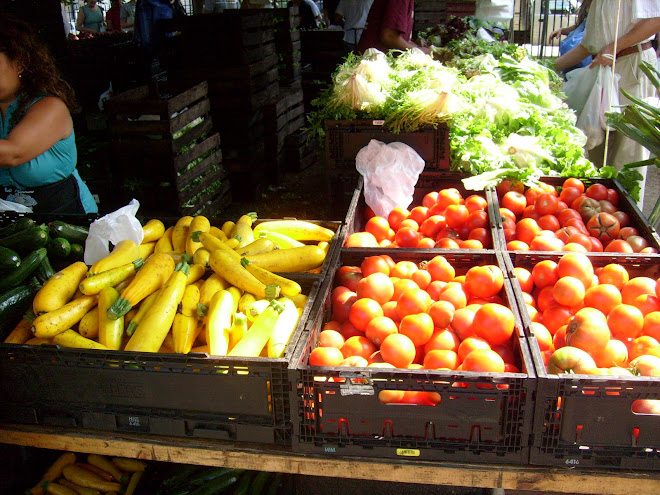
The market is bursting with veggies in all colors, textures, and shapes right now and it is a great time to slice up some vegetables for a great saute and maybe try something you haven't had before.  Eating fresh, local farmers market vegetables is a great way to support your local economy, reduce harm to the environment, and eat food at it's peak flavor and nutritiousness.  I highly recommend it!


Today I found some great stuff to saute--yellow zucchini, carrots, onions, asparagus, and bell peppers.  Nothing too out of the ordinary as far as types of vegetables go, but the quality of them is outstanding!  You can tell just by looking at them that they are different than your standard-issue supermarket produce.  There is so much good stuff to enjoy right now, so take a trip to your local market and do a simple saute this week.  Everything tastes better fresh from the farm!

When you are choosing which vegetables, pick 3-5 different kinds in various colors for an appetizing and beautiful dish.  Pick up something green like fresh herbs, scallions, or spinach to add in at the end.   Look for colorful and interesting variations of common vegetables like yellow raspberries, purple cauliflower, white carrots, yellow tomatoes, or blue potatoes.  There are so many really amazing heirloom vegetables out there.  The above photo shows some bright yellow zucchini, something I never see year-round.


My Greenmarket Vegetable Saute


1 lg yellow zucchini, sliced into half-moons
1 bunch asparagus (I like the thin ones for this)
3-4 fat, juicy carrots
1 medium onion
3 T extra-virgin olive oil
1 red bell pepper, seeded and sliced
1 yellow bell pepper, seeded and sliced
1/2 t sea salt
freshly ground black pepper to taste
1 bunch spinach, washed well and drained,  then roughly chopped
3 t freshly squeezed lemon juice


Wash asparagus and chop the tough ends off.  Set aside to drain.

Remove green tops from carrots and scrub them really well.  There's no need to peel them if organic.  Thinly slice with a knife or on a mandoline.

Peel and slice the onion along the grain/lines into 1/4 inch thick strips.  Chop asparagus into 1-2 inch pieces.

Heat the oil in a large saute pan over medium heat.  Toss in the zucchini, onions, carrots, and peppers.  Saute about 3 minutes, stirring frequently.  Season with sea salt and black pepper to taste.  Add asparagus and cook for another minute or so.

Add spinach to the mix and cover for 30-60 seconds so the leaves wilt.  Uncover, stir, and test asparagus and carrots for doneness.  Finish with lemon juice and enjoy.

Thursday, April 29, 2010

Creamy Asparagus Soup with Parmigiano Reggiano

If you are looking for a new ideas for asparagus, here is a great recipe for creamy asparagus soup.  The creaminess is the result of a puree, rather than a roux and heavy cream so it is light and healthy as well as tasty!  This is a great lunch or starter and freezes well if you don't get through all of it.  If you have zucchini or yellow squash lying around, dicing it and adding it in works really well, too.


 Creamy Asparagus Soup with Parmigiano Reggiano


¼ cup unsalted butter
1 onion, roughly chopped
2 cloves garlic, chopped
1 cup chopped celery
4 or 5 cups washed and roughly chopped asparagus (2 or 3 bundles)
2 cups peeled diced potato
2 T dried basil
1 t sea salt
Freshly ground white pepper to taste
6 cups vegetable broth
1 can cannellini beans, drained
1 cup crème fraiche or plain yogurt (creme fraiche is better!)
2 T freshly squeezed lemon juice


Melt butter in a large pot.  Add onion, garlic, celery, asparagus, potato, dried basil, and sea salt and pepper.

Cook until vegetables begin to soften and stir occasionally, 10-15 minutes.

Add broth and beans.  Bring to a boil, then lower heat and simmer 20-30 minutes.  Remove from heat and let cool a bit.

Add yogurt or crème fraiche.  Puree in batches until very smooth.  Taste and season with salt, pepper, and lemon juice.  Stir in freshly grated parmigiano reggiano just before serving. 


If you like to garnish, add a dot of creme fraiche to the top and maybe some pink peppercorns!


Saturday, March 13, 2010

Foraging with the Wild Man


My treasures from foraging in Prospect Park


Ready to Forage!

Foraging with 'Wild Man'. It's something that has interested me since I first caught wind of it a few years back. Steve Brill, botanist and self-proclaimed forager, lives in Westchester and offers foraging exhibitions in local parks and wildlife areas in New York, Connecticut, and New Jersey. It is his business, but clearly also his passion. His vast knowledge of wild plants and sense of humor combined makes the tour not just any old walk in the park. On these outings, he identifies and gathers wild and native edibles that are found growing in our public spaces and offers advice on their uses and recipes, as well.

Such a beautiful day in Brooklyn!

For those of you who know that I live in New York City, this may sound like a joke--what would I forage to eat in NYC? Rocks? Birdseed? Old bagels in trash cans? Probably, but all it took was a quick call, a desire to spend the day in the one of our many urban green spaces like Central Park or Prospect Park, and $15 to the Wild Man (and an ambitious foraging buddy--thanks, Sarah) and I was foraging real edibles!!

Flowers are popping up everywhere!

I was shocked and amazed at how many things are already growing in the chilly northeast in early March. Some forage-able items were year-round like things that came from trees, but we managed to find a good amount of tiny, tender green sprouted leaves of various sorts and even spotted some tiny early enoki mushrooms.

Witch Hazel in it's purest form!
I love the contrast of Brooklyn buildings in the background here.

As we entered the Prospect Park, immediately someone in the group spotted green! We had come upon chickweed popping up all over the hillside right at the Grand Army Plaza entrance! It was freshly sprouted and tiny, but it was there! Then we came upon such a beautiful tree-like shrub unlike any I had grown up with. Despite being somewhat un-usable to the amateur forager, this witch hazel tree was still such a sight to behold amidst the still bare branches that it was nestled among.

The Wild Man himself

As we hiked and noticed plants and green sprout-y things, the Wild Man would identify edibles and assist in finding enough for everyone in the group to take home, when appropriate. It is worth noting that in plants that need their greens to regenerate, he would identify and discuss the plant, then instruct us not to take them for the sake of their survival in the park. He also entertained the group with plant-inspired stories and played his instrument, the "Brillophone", which was apparently invented by his father and involves air moving through a round mouth and clapping cupped hands--you have to see it to believe it. At lunchtime, we stopped to munch on whatever snacks we brought along. He was generous and shared some delicious sour rye bread that he made by harvesting wild yeast from the air and fruit leather that was so delicious that he made from oliveberries in Central Park. Yep, this guy was a character, alright. All in all, it made for a fun and satisfying day. Check out Wild Man Steve Brill's website for booking a foraging day, ordering books, or just checking out his delicious vegan recipes featuring foraged ingredients. http://www.wildmanstevebrill.com/

Align Center
Northern Bayberry Leaves

Here are some other things we foraged and their uses:

Gingko nuts: about the size of acorns and can be roasted and eaten. They had an interesting flavor to rice or salad that tastes like a combination of green peas and Limburger cheese. Whoa, right?

Daylilies: have a flat shoot and are light green in color. Has a string bean taste with a mild onion bite. The tubers are also edible and taste radish-y. Both are great in stir-fries.

Garlic Mustard Greens: beautiful tiny leaves that look like heart-shaped mint leaves. They have a fresh garlic bite and the wild man recommends making pesto with them.

Kentucky Coffee Tree: huge green pods the have big beans in them. The recommended usage is roasting the beans and grinding them. Then, making a hot chocolate-type beverage with soy milk, carob chips, cocoa powder, soy lecithin, stevia, and a bit of orange extract.

Common Spice Bush: a large bush that has fragrant twigs that are reminiscent of allspice. Can be used in sweet or savory dishes.

Black Birch: a tree with wintergreen flavored twigs that offer a mild aspirin-like effect. Apparently, aspirin is derived from elements from this tree. The twigs make a nice minty tea, but also are the best for teething babies since they have a pain killer effect.

Northern Bayberry: leaves of this tree were dried, but still hanging on. They are the native, wild version of bay leaves.

Mugwort: powerful Chinese herb

Common Thistle: cook in soup/smells like parsley

Sassafrass: the tree that is used in the making of natural root beer, has medicinal uses, as well


Garlic Chives were everywhere!

Wild Salmon and Asparagus with Garlic Chives

4 6-8 oz wild salmon fillets, rinsed and patted dry
2 T white wine vinegar
1/2 t minced garlic
1 T Dijon mustard
1 T extra-virgin olive oil
1/4 t sea salt
1/4 t freshly ground black pepper
1 bundle thin asparagus stalks, trimmed and/or peeled at the bottom
1/4-1/2 cup snipped garlic chives (regular chives work if you can't find them!)
1 lemon, cut into wedges


Place fillets in a shallow bowl. Mix vinegar, garlic, Dijon, oil, salt, and pepper in a small bowl and reserve half of the mixture. Pour other half over fish. Cover and chill for 30 minutes to 6 hours.

Preheat oven to broil and line a broiling pan with foil to prevent a mess. Toss asparagus with reserved marinade and transfer to lined broiling pan. Remove fish from marinade and pat fillets dry. Arrange on lined broiling pan and sprinkle generously with snipped garlic chives.

Broil 8-10 minutes or until fish is just done in the center. This is approximate and depends on the thickness of your fillets and also on your oven. Serve immediately with lemon wedges.


Wednesday, July 22, 2009

Tomato, Basil and Asparagus Salad with Ricotta Salata


Awhile back, I found these beautiful golden sun-dried tomatoes at LifeThyme and have been dying to use them. When I opened the package, I found they were really moist, almost not completely sun-dried--a good thing that I had them in the fridge for the last few weeks. I had some basil and parsley to use up and picked up some great plum tomatoes on my way home. This turned out really nicely for a quick and easy meal.

I cooked some whole wheat rigatoni tossed with olive oil, lemon juice, and a ton of black pepper to eat with this. Will ate his with rosemary chicken.

If you have never used ricotta salata, don't let that deter you. It's a really mild sheep's cheese from Italy, a little dry and crumbly, and very light as far as cheeses go.


Tomato, Basil, and Asparagus Salad with Ricotta Salata

1 t finely minced garlic (or grated on the microplane--easiest way)
1 t dijon mustard
1 T honey
1/3 c freshly squeezed lemon juice
1/4 c white balsamic vinegar (dark is fine, too, but I like white on this salad)
sea salt and black pepper
1/2 c fruity extra -virgin olive oil

Combine all above ingredients in a small mixing bowl, except for olive oil. Once uniform, slowly whisk the oil in to emulsify. Set aside.

1 bundle of thin asparagus, sliced into 1 or 2 inch pieces (discarding the 2-3 inches off of the end)
4 large plum tomatoes, chopped
1 c moist sun-dried tomatoes(drain, if marinated, or soak in warm water then drain, if really dry)
1/2 c red onion, sliced into very thin half moons.
1/4 cup chopped parsley (opt. --you can just use a little more basil instead, if you want)
1/2 cup basil, chopped or chiffonade
about 8 oz ricotta salata cheese

Clamshell pack of mixed baby greens or baby arugula


Boil a small pot of salted water. Boil asparagus for 1 minute, drain and cool immediately (you can rinse under cold water or shock them in a bowl of ice water for a minute or so)

In a mixing bowl, combine asparagus with remaining ingredients (except for baby greens). Add dressing from above, to taste, and toss. I prefer using about half of it.

Let rest for 15-20 minutes to let flavors blend before serving. Serve on greens, maybe pop a few olives in there. . .if you like that sort of thing.

The dressing keeps in the fridge for a few weeks and is good on simple salads or as a marinade.